
Gaming controllers have evolved far beyond simple buttons and joysticks. Modern players expect fast response times, accurate movement, comfortable designs, and hardware that can keep up with demanding games. This is where the uggcontroman controller from under growth games enters the conversation, offering a custom approach to controller design with a strong focus on responsive input and low-latency performance.
Instead of treating a controller as nothing more than an input device, the concept behind UggControMan focuses on how different types of physical input can be detected, interpreted, and transmitted during gameplay. Its design combines sensory input technology, custom firmware processing, and optimized transmission methods to create a more responsive gaming experience.
What Is UggControMan?
UggControMan is presented as a custom high-performance gaming controller associated with UnderGrowthGames. Its main purpose is to give players a more refined connection between their physical actions and what happens on screen.
Traditional controllers generally rely on buttons, analog sticks, triggers, and vibration motors. UggControMan takes that basic concept further by combining different sensing technologies. Analog stick movement, button touch, pressure, and trigger input can be interpreted as separate signals rather than treating every action as a simple on-or-off command.
For gamers who care about precision, this approach can be particularly interesting. Small differences in movement can matter in competitive games, racing titles, platformers, action games, and other genres where timing and control are important.
Sensory Input Layer Explained
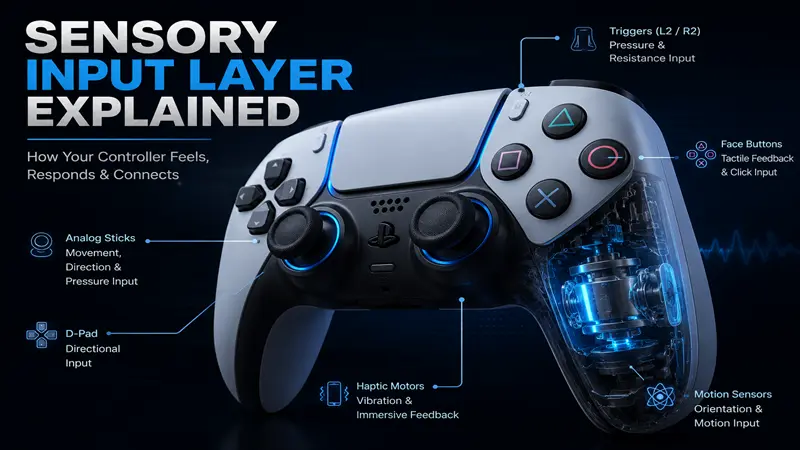
One of the most interesting aspects of the uggcontroman controller from under growth games is its sensory input layer.
The controller is designed around several types of input detection. Analog stick sensors monitor movement, while capacitive button membranes can detect touch and force intensity. Pressure-sensitive triggers add another level of control by allowing the system to recognize more than a simple button press.
Micro-haptic motors are another part of the input experience. Instead of relying only on traditional vibration, micro-haptic feedback can provide more detailed physical responses during gameplay.
The benefit of combining these technologies is that the controller can capture more information from the player’s actions. A gentle trigger press and a stronger press do not necessarily have to be interpreted in exactly the same way.
For games that use variable movement, aiming, acceleration, or pressure-based controls, this type of input detection can make the controller feel more responsive and expressive.
Custom Firmware for Faster Input Processing
Hardware is only one part of controller performance. The firmware that interprets incoming signals also plays an important role.
The UggControMan concept uses a modular firmware architecture designed to process controller signals in real time. Its firmware interpretation engine is intended to quantize signal noise, apply predictive smoothing, and handle small input changes quickly.
Signal processing matters because raw physical inputs are not always perfectly clean. Analog sticks and other sensors can produce tiny variations that do not necessarily represent an intentional player action.
A well-designed firmware layer can help distinguish useful movement from unwanted noise. Predictive smoothing can also help create a more consistent response while maintaining the player’s intended direction.
The goal is not simply to process more information. It is to process the right information quickly enough that the player does not feel disconnected from the game.
Why Low Latency Matters in Gaming
Latency is one of the most important considerations when choosing gaming hardware.
Even a small delay between pressing a button and seeing the corresponding action can affect the experience. In casual games, a slight delay may be difficult to notice. In competitive gameplay, however, timing can become much more important.
The uggcontroman controller from under growth games is designed with low-latency input transmission as one of its core priorities. Its architecture includes wireless adaptive frequency hopping as well as an optimized wired mode.
Adaptive wireless communication can help maintain a reliable connection by intelligently managing available frequencies. Meanwhile, the wired mode is designed to prioritize input packets over secondary data.
This approach reflects an important principle in gaming hardware: the controller should prioritize the information that actually affects gameplay.
Wired and Wireless Connectivity
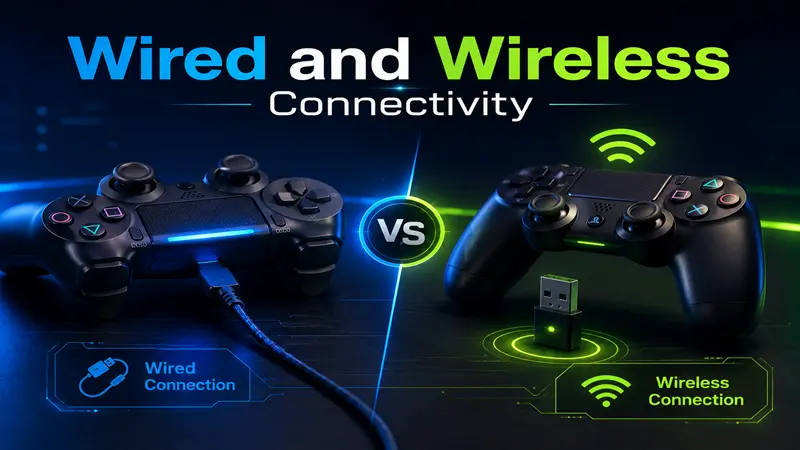
Players have different preferences when it comes to controller connectivity. Some prefer wireless freedom, while competitive gamers may choose a wired connection when they want to minimize possible transmission delays.
UggControMan is designed to support both approaches.
The wireless system uses adaptive frequency hopping to manage communication between the controller and its receiver. This is useful for players who want to avoid cable restrictions while maintaining a responsive connection.
The wired mode takes a different approach by prioritizing input transmission. This can be useful when response consistency is more important than convenience.
Having both options gives players flexibility. Someone playing casually from a sofa may prefer wireless connectivity, while a competitive player at a desk may choose the wired configuration.
What Makes the Controller Different?
There are countless gaming controllers available today, so simply offering another button layout is unlikely to make a product stand out.
The uggcontroman controller from under growth games takes a more technology-focused approach by combining multiple layers of input processing.
Its key areas include:
- Analog stick sensing
- Capacitive button detection
- Pressure-sensitive triggers
- Micro-haptic feedback
- Real-time firmware processing
- Signal-noise management
- Predictive input smoothing
- Adaptive wireless frequency hopping
- Optimized wired transmission
Together, these features create a controller concept that focuses heavily on the complete input chain.
Instead of looking only at the physical buttons, the design considers what happens from the moment a player touches a control to the moment that signal is interpreted and transmitted.
Who Could Benefit From UggControMan?
Not every gamer needs an advanced controller. For someone who mainly plays casual games, a standard gamepad may already provide everything necessary.
A more sophisticated controller becomes interesting when precision and responsiveness are priorities.
Competitive players may appreciate fast input processing, while racing-game fans can benefit from pressure-sensitive controls. Platforming players may also value accurate analog movement, particularly when games require careful positioning.
Players who spend long periods gaming may also be interested in how the controller’s physical feedback and input design feel during extended sessions.
The right controller ultimately depends on the games a person plays and the type of experience they want.
Is UggControMan Worth Considering?
The answer depends on what you expect from a gaming controller.
If basic controls are enough for your gaming style, investing in a specialized controller may not provide a meaningful advantage. However, players who care about precise inputs, responsiveness, and advanced sensing may find the UggControMan concept worth exploring.
The strongest part of its design philosophy is that it does not focus on a single feature. Instead, it considers the complete path of an input—from physical touch and pressure to firmware interpretation and final transmission.
That makes it particularly interesting for gamers who want to understand how controller technology can influence gameplay.
Final Thoughts
The uggcontroman controller from under growth games represents an interesting approach to modern gaming hardware. Its combination of sensory inputs, real-time firmware processing, haptic feedback, and low-latency transmission is designed around one central goal: creating a closer and more responsive connection between the player and the game.
Rather than relying solely on traditional buttons and sticks, the controller concept explores how additional sensing and smarter signal processing can improve the way gaming inputs are captured.
For players who value precision and responsive hardware, UggControMan is certainly a controller worth keeping an eye on. As gaming technology continues to evolve, innovations in input detection and signal processing could become just as important as graphics and processing power.
The future of gaming may not only be about what appears on the screen—it may also be about how accurately and naturally players can interact with it. See more
Pingback: Know Controller Made by UndergrowthGames UGGControMan: What to Know - technologyboost
Pingback: UndergrowthGames Health: A Guide to Healthier Gaming - technologyboost